This past Saturday, Suzanna and I jumped on our bikes and rode 30 miles as part of our training for the 50 mile Obliteride bike ride on August 9th to raise money for Fred Hutchinson Cancer Research Center, where I also happen to work. Then on Sunday, we drove up to Snoqualmie Pass, got off at the Hyak exit, and Suzanna dropped me off for a run through the Hyak tunnel and along the Iron Horse trail where we reunited after 21 miles. You see I am also training for my 11th marathon, the Light at the End of the Tunnel race on June 14th and I was running the first 21 miles of the course.
I amrunning the marathon in two weeks for myself and my goal to finally qualify for the Boston Marathon. Two years ago, I actually qualified at the Eugene Marathon but, alas, that was the year that the Boston Athletic Association dropped the qualifying times in September another minute and 38 seconds for the 2014 race and I no longer qualified. They dropped the qualifying times again for the 2015 race by 1:02 so who knows what the real eventual qualifying time will be this year for my age group. Anyway, it has always been a life-long goal to qualify for the Boston Marathon and I am hoping to do it in a couple of weeks.
On the other hand, I am riding Obliteride, not for myself, but for all those who’s lives have been affected by cancer. So whether or not I qualify for Boston, I will continue my training and fund-raising for Obliteride and Fred Hutch. And as much as I want to do well in the marathon and qualify, Obliteride and cancer research is so much more important.
As many of you know, I work at Fred Hutchinson Cancer Research Center (or simply Fred Hutch). It’s a very rewarding job knowing that I am helping scientists crack the code of cancer and save lives. But to be honest, when working in cancer research, it’s very easy to keep the suffering from cancer at a very distant, clinical, and safe distance from oneself. Hey, it’s just a job! (In reality, it’s not just a job, but I’ll save that for another post.) But I have a more personal relationship with this thing called cancer.
Over twenty years ago my sister, Pat, had a close call with melanoma.
My dad had a pre-cancerous but serious disease of his throat called Barrett’s Esophagus. It got so serious for my dad that they had to surgically remove part of his esophagus in a quite painful surgery. (Fred Hutch is a world leader in Barrett’s Esophagus research, by the way.)
My cousin, Paul Kunzinger, who was born within a year of me, died of lung cancer in 2007 at the age of 49 leaving behind his wife and two lovely girls. (If you are interested, I wrote about Paul in a blog post back in 2009 while I was raising money for a different cancer ride.) Needless to say, his death was devastating to his family.
Cancer really hit home, however, when my wife, Suzanna, had a major scare when her only kidney (transplanted from her dad almost 20 years ago) was found to have a cancerous tumor on it a few months after we were engaged in 2010. It was very likely that she might lose her kidney in the battle and then what? I was certainly ready to give her one of mine but we didn’t know if I would be a good match. Fortunately, her kidney surgery was a resounding success and she was able to keep her kidney. She gets a scan every year to make sure it hasn’t come back. (Suzanna, who is also riding Obliteride this year, has written about her cancer battle in a series of posts on her blog.)
Suzanna and I are so so lucky that it worked out so well because, to be frank, we feared the worst. I’m sure we felt like many people who get the diagnosis of cancer. That’s why research needs to continue at world-class cancer research centers like Fred Hutch. And this is why Suzanna and I are riding Obliteride to raise money for Fred Hutch. I hope you can help.
A couple of days ago I decided to join Obilteride 2015. I also participated in this fundraiser for the amazing place where I work back in 2013. This year, I am riding the 50 mile ride with my wife, Suzanna. Unlike many charity events, 100% of the money raised for Obliteride goes to fund the awesome work being done at the cancer research center that I work for, Fred Hutchinson Cancer Research Center. That’s right, since a number of sponsors are picking up the overhead to run the event, 100% of the money donated will go to directly to cutting-edge cancer research done at Fred Hutch; research aimed at curing cancer and reducing suffering from this horrible family of diseases.
I have to admit that I am very lucky to work at the world-renowned Fred Hutch alongside some of the brightest scientists in the world. Fred Hutch has done a lot of wonderful research in order to understand, prevent, treat, and yes, even cure cancer. The funds raised by Obliteride when combined with grant funds from the National Institutes for Health and other funding agencies will help Fred Hutch continue its pioneering research to help obliterate cancer.
So while I continue to train for the ride on August 9, I am hoping you will consider making a donation to my Obliteride campaign. Thank you!
Wow. I had just recently come to the same conclusion: eat better rather than depending upon lots of supplements. And with very few exceptions, you get it all with a plant- based low-processed food diet. Thanks Jean for another great post:
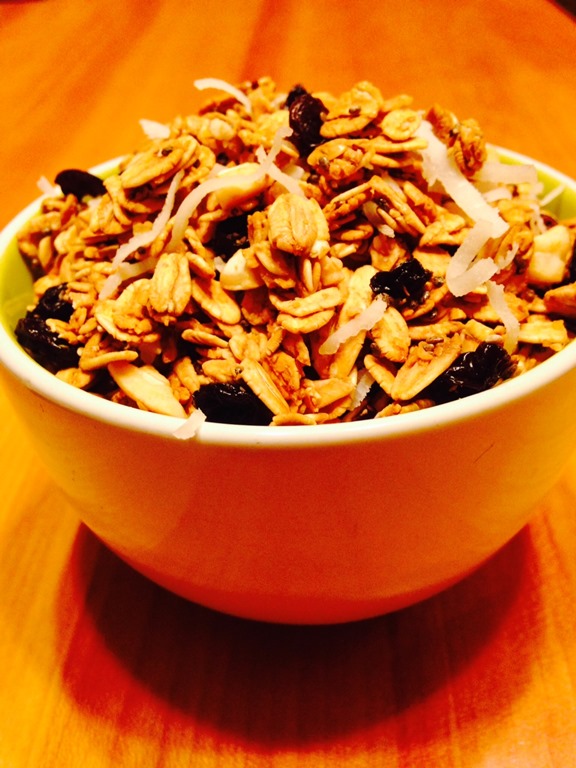
Paul and I like to eat granola but frankly most of the granola out there that you can buy is full of fat and sugar, and over-processed. Making your own granola, however, is quite easy. My granola recipe is influenced by Kathleen Daeleman’s crunchy granola recipe from her book Cooking Thin with Chef Kathleen, but I’ve made it even healthier by reducing the sugar and adding chia, flax, and cocoa nibs. It’s of course a completely plant-based (vegan) recipe.
Ingredients
1 cup organic coconut sugar or organic brown sugar
½-cup water
4 tablespoons of organic chia seeds
2 tablespoons of organic ground flax
2 teaspoons organic vanilla extract
1/2 teaspoon of salt
8 cups organic rolled oats
1 cup of chopped nuts (e.g., cashews, almonds, pistachios)
¼-cup cocoa nibs (optional)
1 cup of dried fruit (e.g, cherries, cranberries, raisins, currants)
Coconut flakes (optional)
Steps
Preheat oven to 275 degrees Fahrenheit.
Line 2 cookie sheets with parchment paper and set aside.
Using a 4-cup microwave proof glass measuring cup, add your sugar and water, and microwave for 1-2 minutes until the sugar is dissolved. Add chia, flax, vanilla, and salt to the measuring cup and let stand for 10-15 minutes.
Get out your biggest bowl, and combine the oats and nuts with the contents of the glass measuring cup. Add the cocoa nibs if you are using them.
Mix well then spread the granola onto cookie sheets.
Ready for the oven.
Bake for 90 minutes.
After removing the granola from the oven, add dried fruit and other mix-ins like coconut flakes.
Let the granola cool completely, before storing it in an airtight container.
Fresh out of the oven.
Carefully pouring the granola from the parchment paper into a glass container after it has cooled.
Variations
Each time I make this recipe, I vary the nuts and dried fruit used. Some great flavor combinations I’ve made in the past:
Pistachio & dried cherry
Almond & cranberry
Today’s mix included:
cashews,
currents,
and sweetened coconut flakes.
I usually use 1-cup of nuts and 1-cup of dried fruit, but you can adjust to suit your needs. You can use either raw nuts, or roasted/lightly salted nuts.
This post is part of the Virtual Vegan Potluck, held on November 16, 2013. At the bottom of the post, you will find links to the previous and next recipe posts in the Virtual Vegan Potluck. Enjoy! Here is a link to the beginning of the potluck posts.
Paul and I recently became vegan. Not too long ago, Paul requested some lentil soup. I rooted around online and adapted a recipe I found somewhere. This is my adaption. It makes for a great fall or winter meal.
For us, this soup meets all our needs: it’s easy to make, wonderfully delicious, and naturally vegan. That is, it’s vegan without really trying since it’s all vegetable-based. We hope you like it as much as we do.
A bowl of this delicious soup.
Mushroom Sweet Potato Lentil Soup
Ingredients
1 Tbs olive oil
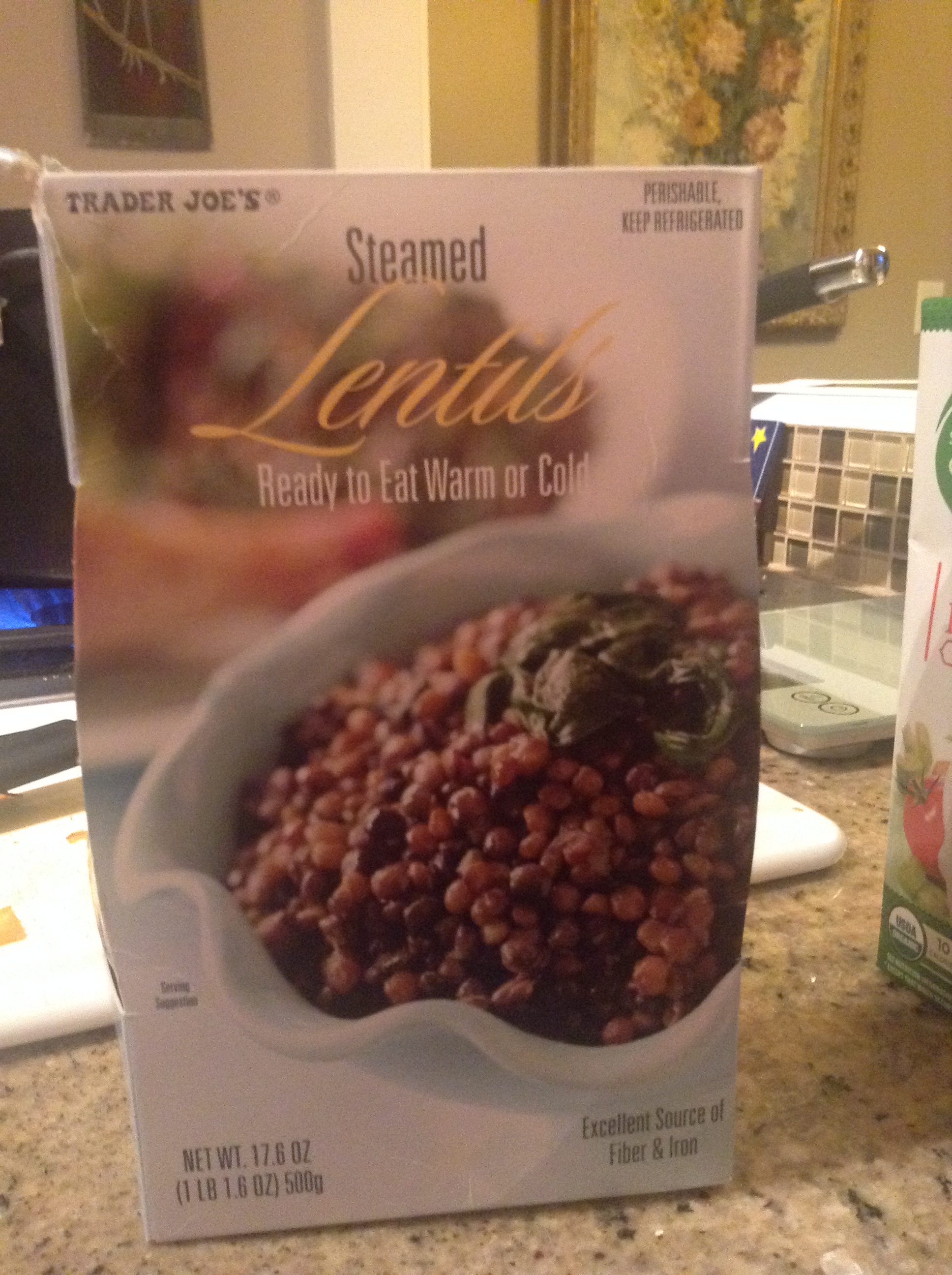
1 bag of Trader Joe’s Steamed Lentils (or cooked lentils)
2 medium sweet potatoes, chopped
1 medium onion, diced
1 Tbs chopped garlic, minced
3-4 cups chopped mushrooms (any variety or mix)
1 Tbs each
Cumin
Turmeric
Chili powder
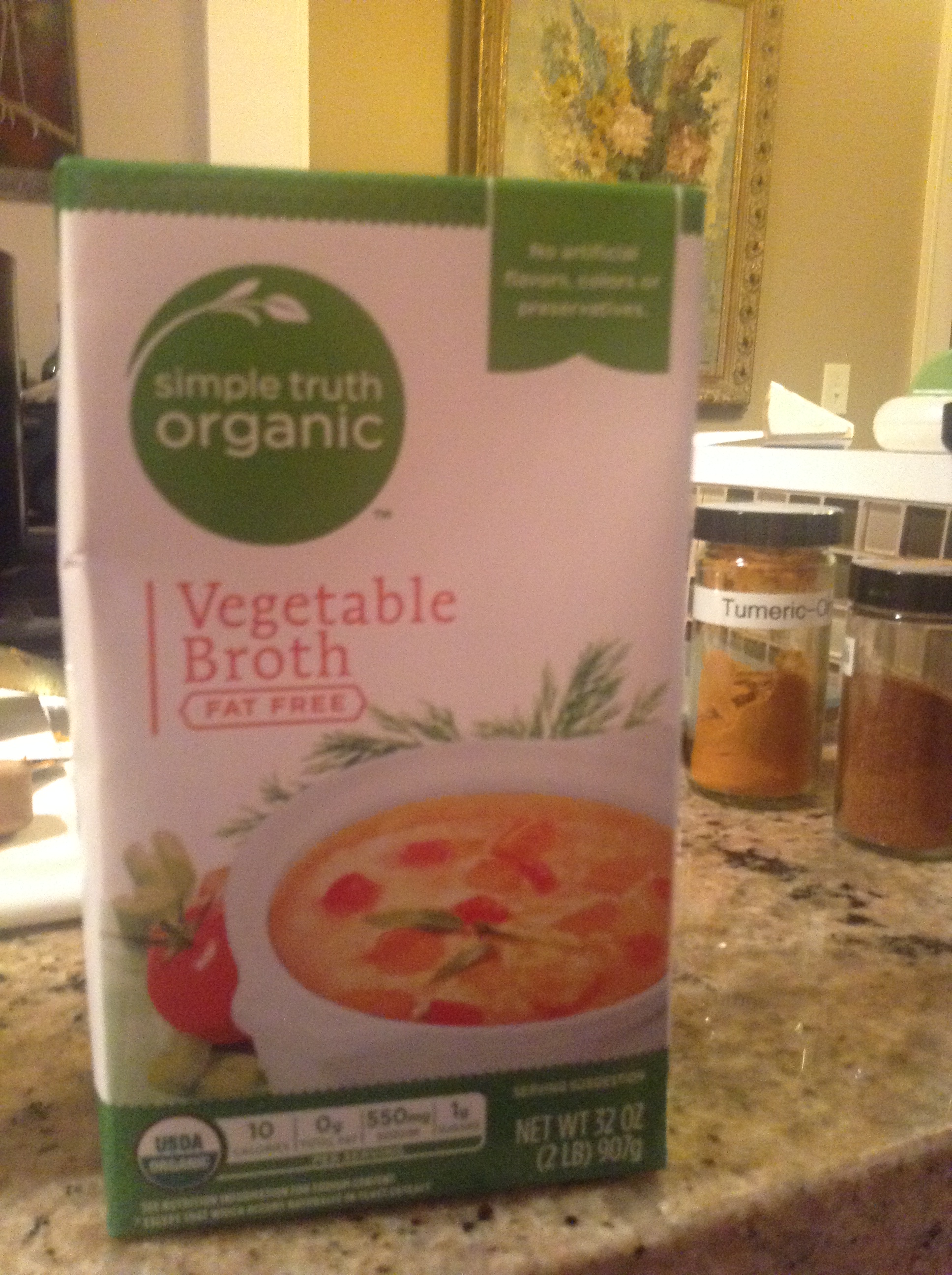
4 cups vegetable stock (home-made or from a box)
Steps
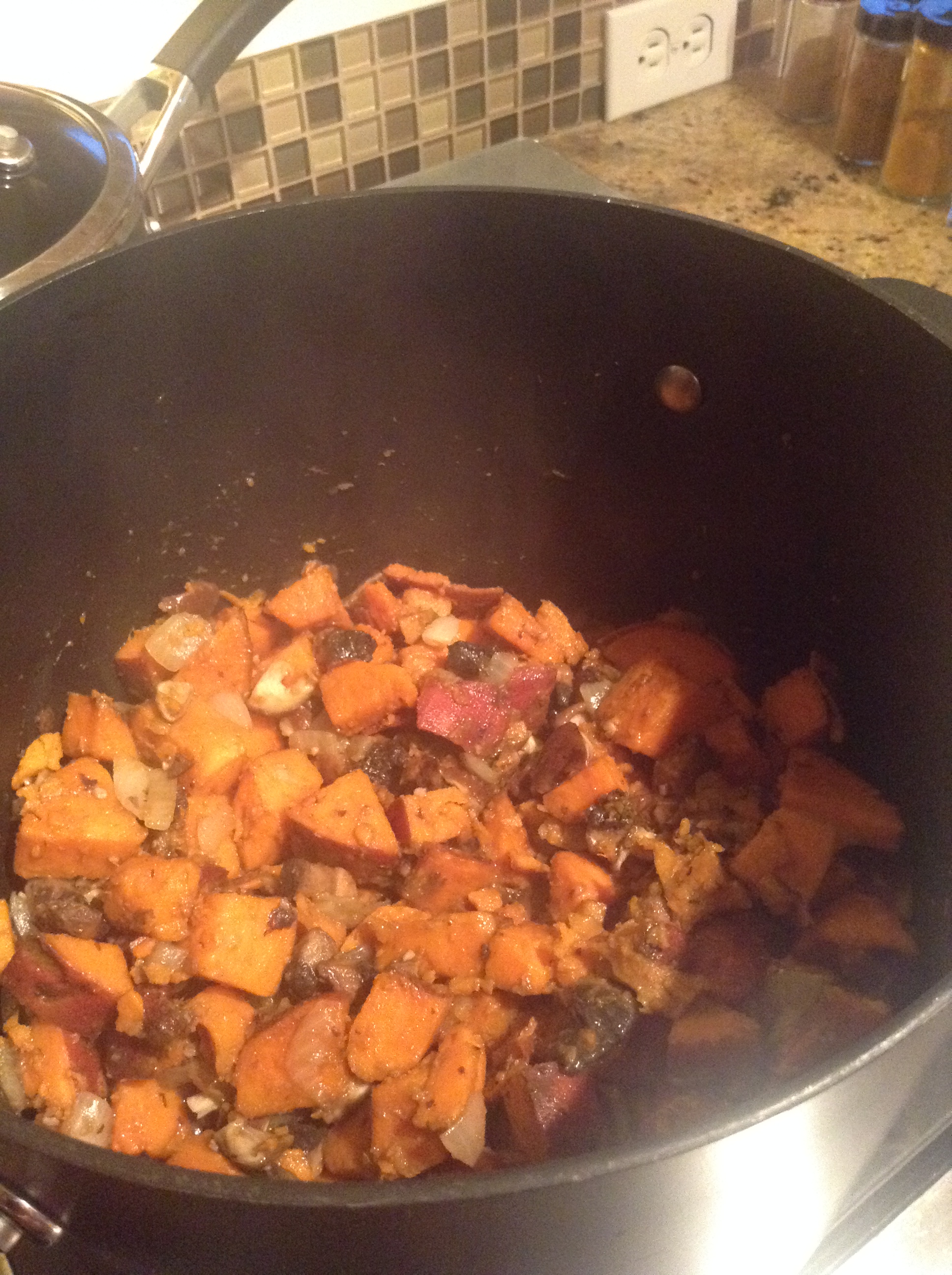
Add the olive oil to a big soup pot.
Saute the chopped onion in the olive oil.
After a few minutes, add chopped sweet potato to the pot.
Being careful not to burn it, add the garlic and continue to saute until the potatoes are soft.
Add mushrooms and spices.
Saute until slightly browned.
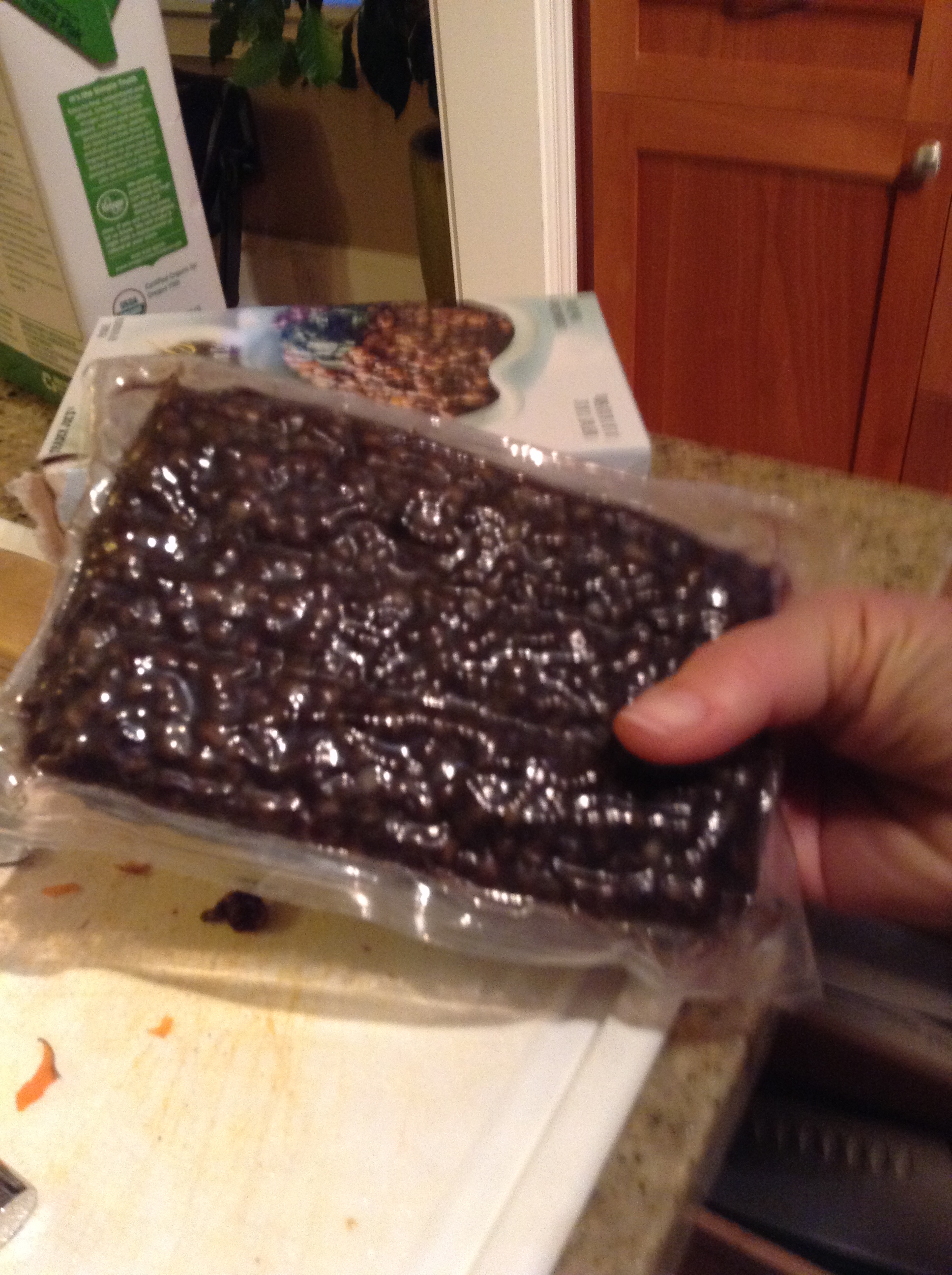
The secret that makes this recipe very quick and easy is to use a package of steamed lentils from Trader Joe’s. Now I usually shy away from pre-fab food, but these are minimally processed and really make life easier when dealing with lentils. Of course, you can substitute cooked dried lentils if you prefer.
Add lentils and broth.
Bring to a boil.
Simmer for 15 minutes or so.
Serve in bowls with some crusty bread.
Trader Joe’s Steamed Lentils box.The bag of lentils inside the box.Box of Vegetable Broth.Bulk organic spices.Sautéing the sweet potato, onions, and garlic.Go back to prior Virtual Vegan Potluck postGo forward to next Virtual Vegan Potluck post
This post is part of the Virtual Vegan Potluck, held on November 16, 2013. You can use the images above to navigate to the previous and next recipe posts in the Virtual Vegan Potluck. Here is also a link to the beginning of the potluck posts. Enjoy!
Suzanna and I are excited to be part of our first Virtual Vegan Potluck. You can read about it at this link but come back and see our post on a delicious soup as well as links to all the other participting posts (there are 146 wonderful vegan potluck recipes from all over the world) just after midnight (or as soon as you wake up) on November 16 (eastern standard time)!
Suzanna and I have been pescetarians for some time. That is, we have been eating a vegetarian diet along with some animal products: eggs, milk and dairy products, and sustainably-raised seafood. We try to concentrate on sustainable organic minimally-processed foods as much as possible which requires constant vigilance.
At the same time, we both hoped to move towards a truly vegan diet at some point.
Vegetarian/Pescetarian
Now there are a number of reasons why people choose to become a vegetarian. I moved gradually to being vegetarian. I gave up red meat around 20 years ago. At the time, the primary motivation was health. I decided that red meat was not good for me and that was that. Actually, at first, I actually gave up all meat, but then I backed off a bit and resumed eating poultry and seafood. Fast forward to about 5 years ago when I decided to become a lacto-ovo pescetarian. And while my original motivation was health, I gradually became more and more aware of animal cruelty that is commonly practiced in farming. Still, I thought that milk and eggs were okay, especially organic milk and egg products.
Inconsistent Living
Now, I think it’s fair to say that most people live with a certain number of inconsistencies in their lives. I know that I do. Another way of saying it is that most of us are, to some degree, hypocritical. That is, we try to do the right thing, but it’s not always possible unless you are ready to control everything in your life. As soon as you interact with the rest of the world and buy food, pump gas, purchase a toy for your child, watch a film, drink that beer, work at a job, purchase a sweater, live in a house, or visit a doctor, you lose some of the control over the ethics of the people and processes that happened to get you your sandwich, gasoline, toy, movie, glass of beer, job, sweater, home, or medical clinic.
Since writing this post back in 2013, we have dove into climate change in a big way and had made many adjustments to our lifestyle, purchases, and advocacy efforts.
Even your decision to do something as noble as write a check to a charity or hand a five dollar bill to a homeless person, comes with the potential of a number of unintended consequences, e.g. the misuse of the money, contributing to alcoholism.
Then there is the matter of suffering and injustice in the world. Or the fact that we may be living on once stolen land. “How do we sleep while our beds are burning?” What are we to do about all the suffering, disease, and injustice in the world?
At some point, you have to short-circuit the thinking. You can’t constantly think of every possible chain of consequences of every decision you make. Otherwise, life would be unbearable. But for me and Suzanna, this doesn’t mean giving up. We believe in being mindful of the ramifications of the choices we make and taking care of our neighbor, both local and globally speaking.
On The Other Hand
Getting back to the point I was trying to make: I would be lying if I said that I always do the most sustainable, most just, most considerate, least self-serving thing. Of course not. But, when it comes to the choices I make in my food, I try to be fairly conscious and conscientious. And, to be frank, over the years, I have learned about a number of issues with farming, especially the industrial farming that is so commonplace in the United States and “western world.”
In fact, Suzanna and I have talked many times over the past few years about becoming vegan. And then we would move on to something else while we sipped our lattes, ate our cheese, and, though less frequently, consumed a plate of scrambled eggs.
Suzanna and I hosted a meetup on moving to a plant-based diet in February 2022. Check out the slides or watch the recording.
Getting Vegucated
Trailer from Vegucated
Then we recently watched the film Vegucated and the desire to move towards veganism was cemented. If you are curious about veganism or wish to learn more about what really happens on most farms, I suggest you watch this film. It’s available on Netflix, Amazon Prime, and many other sources. See the Vegucated site for more details.
Okay, enough beating around the bush, here’s the long and the short of it:
the businesses and people who bring the vast majority of animal products to market, including meat, eggs, and dairy (yes, even dairy has major issues), treat animals in a disrespectful, cruel, and torturous fashion.
And they are not exactly doing good things for global warming and managing the world’s resources either. This is not to say, that there aren’t positives to come out of industrial farming: obviously, many people love animal-based food products. And these practices make food affordable for many people. But Suzanna and I can no longer support these practices.
We have drawn a line in the sand and farmed animals and animal products are on the other side.
Of course, we still have our inconsistencies. To name a few: we buy food at grocery stores and restaurants that do handle animal food. We aren’t throwing away our leather goods. (Though, it’s our intention to not purchase any more leather, feather, or fur-based products.) Also, we often share food with people who eat meat. I will also buy animal products for my children who are not vegan when we eat outside the home, though we only serve vegan food when they are with us.
We get plenty of protein: from beans, tofu, and nuts. And we are adapting to substitutes when necessary. Like Daiya cheese. And hemp and soy milk. And the occasional vegan treat. Hopefully, we can share some vegan tips and tricks in future posts on this blog.
Since writing this post back in 2013, we abandoned the practice of occasionally eating wild seafood. We have also moved more towards a more whole-food, plant-based approach. IOW, eating less highly-processed foods, even if they are vegan. Alas, we are not perfect.
After a few false starts, I think we have finally committed to this for good. Our biggest give-ups have been milk and cheese. But, despite what you may have heard, there is life after cheese. And we still have gluten, beer, and wine!
Great post about silliness of the diet of the year club and bad side of meat-heavy diets. Nutrition research tells us to eat whole, primarily (or, for vegans, only) plant-based foods. And workout/exercise regularly. It’s that simple.

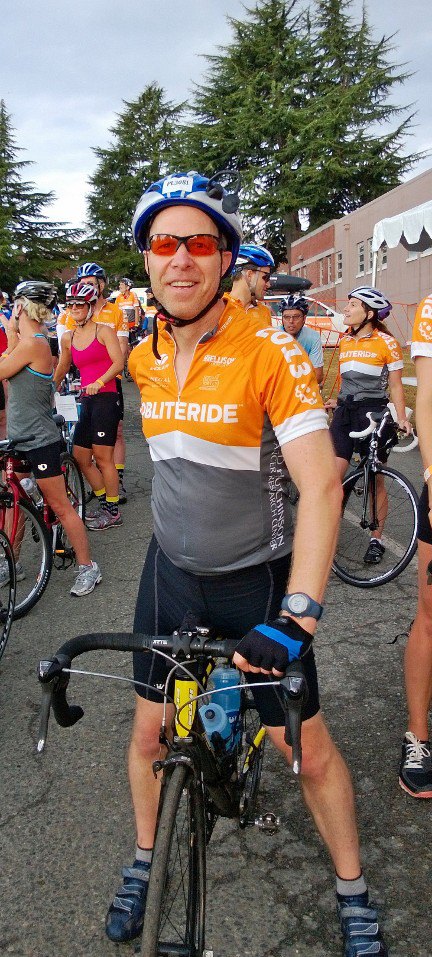 This past Saturday, Suzanna and I jumped on our bikes and rode 30 miles as part of our training for the 50 mile Obliteride bike ride on August 9th to raise money for Fred Hutchinson Cancer Research Center, where I also happen to work. Then on Sunday, we drove up to Snoqualmie Pass, got off at the Hyak exit, and Suzanna dropped me off for a run through the Hyak tunnel and along the Iron Horse trail where we reunited after 21 miles. You see I am also training for my 11th marathon, the Light at the End of the Tunnel race on June 14th and I was running the first 21 miles of the course.
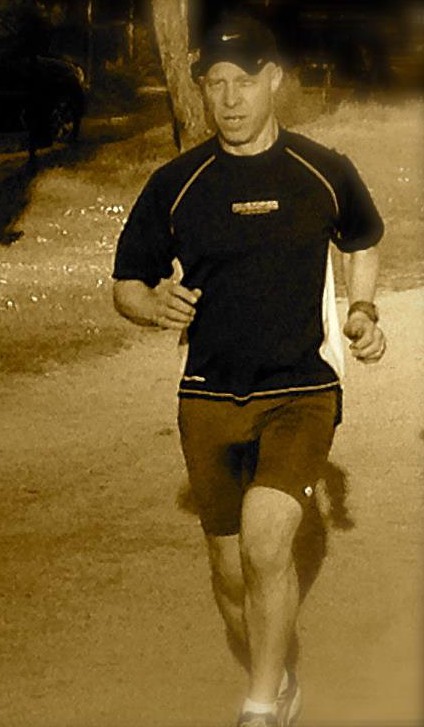 I am running the marathon in two weeks for myself and my goal to finally qualify for the Boston Marathon. Two years ago, I actually qualified at the Eugene Marathon but, alas, that was the year that the Boston Athletic Association dropped the qualifying times in September another minute and 38 seconds for the 2014 race and I no longer qualified. They dropped the qualifying times again for the 2015 race by 1:02 so who knows what the real eventual qualifying time will be this year for my age group. Anyway, it has always been a life-long goal to qualify for the Boston Marathon and I am hoping to do it in a couple of weeks.
 hon and qualify, Obliteride and cancer research is so much more important.





 Suzanna and I have been
 The Whole Geek